
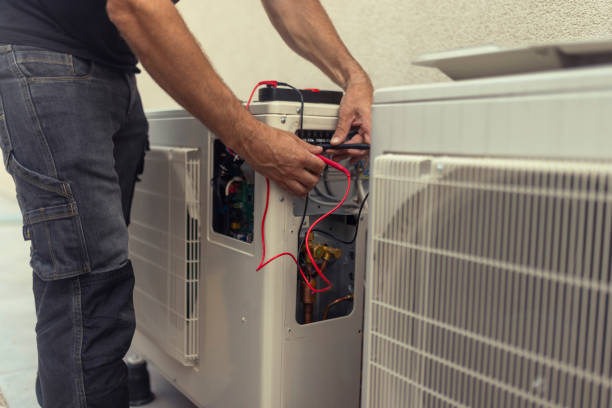
Close-up on the hands of the electrician installing the heat pump, connecting the wires
Choosing the right size air conditioner for your home or office is critical for both efficiency and comfort. The size of an AC unit does not refer to its physical dimensions, but rather its ability to cool a given area, which is measured in British Thermal Units (BTUs). A unit with a higher BTU rating can cool a larger space. However, bigger isn’t always better when it comes to choosing an AC unit.
If you choose an air conditioner that’s too large for your space, it will cycle on and off more frequently. This not only wastes energy but also puts unnecessary strain on the components of the system. Such frequent cycling can lead to premature wear and tear on the system, leading to costly repairs or replacement down the line.
On the other hand, if you select an AC that’s too small for your space, learn all about it will have to work overtime trying to cool it down. This constant running can drastically increase your energy bills and still may not provide adequate cooling during peak heat times. Furthermore, because smaller units might struggle to control humidity levels effectively, this could result in dampness or mold problems.
Therefore, finding just the right size air conditioning unit is essential for achieving optimal efficiency and maintaining comfortable indoor temperatures throughout summer months. An accurately sized unit will run long enough cycles to efficiently remove humidity from the air while also providing consistent cooling.
To determine what size AC you need involves several factors including square footage of your home or room; ceiling height; insulation quality; number of windows and doors; amount of sunlight exposure; number of occupants in the house etc. These determinations are best made by HVAC professionals who use specific calculations known as Manual J Load Calculation method.
An experienced HVAC technician will take into account all these factors before recommending an appropriate-sized air conditioner for your needs. They’ll ensure that you get a model that cools effectively without wasting energy — saving money on both purchase price and ongoing utility costs.
In conclusion, choosing the right AC size is a critical step in ensuring energy efficiency and maintaining comfortable indoor temperatures. An oversized or undersized unit can lead to higher energy costs, inadequate cooling, and potential damage to the unit itself. Therefore, it’s advisable to consult with HVAC professionals when deciding on an air conditioning system for your home or office. They can provide expert advice based on thorough calculations and experience, ensuring that you choose the most efficient and effective AC size for your specific needs.